Written in collaboration with vets

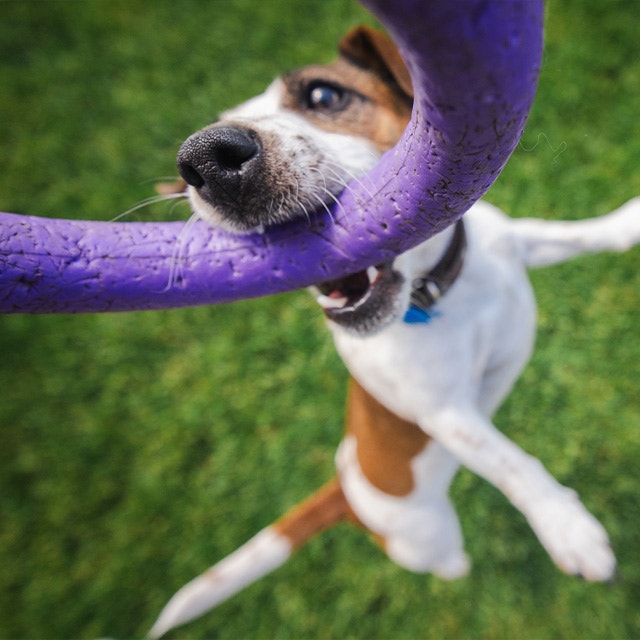

Puppies are curious little creatures keen to explore the world, and one of the ways they do this is with their mouths. This means biting, chewing and mouthing (when your puppy puts their mouth around something but doesn’t bite down).
While all this is natural behaviour, it’s important you get your puppy out of the habit of biting before they get bigger and stronger. Follow this simple advice on how to stop puppy biting.
To prevent your puppy from biting, it’s important you follow effective and proven strategies rather than resorting to physical correction or punishment.
Here are some key strategies that will help stop your puppy nipping at you:
If you’ve ever watched a litter of puppies together, you’ll have seen they mouth and bite each other and often their mum too. So it’s hardly surprising that when puppies play with humans they behave in a similar way.
Mouthing and biting isn’t just about play and getting to know the world though. This is a big time for puppy development and that includes teething.
Teething can cause discomfort – just as it can for human babies – and is likely to make your puppy want to chew on anything and everything.
Puppies’ baby teeth will appear at around four weeks old and fall out at around 12 weeks old. This means their gums will be sensitive during this period, and chewing can be a soothing behaviour.
Adult teeth typically come through by the seven-month mark, but this varies depending on size and other factors.
Tackling dog training problems is all about being consistent and patient, whether you want to stop puppy biting or deal with any other issue.
The thing to remember about biting and mouthing is that, while they are natural behaviours for your puppy, you do need to make sure they learn that using their teeth on a person isn’t acceptable. Here’s how:
Although it might seem like a good idea to try to cut out all puppy biting and mouthing from the beginning, it’s actually better to start by teaching your puppy how hard they can press skin before it becomes painful.
This is called bite inhibition training, and it’s vitally important because it means that if, later in life, your puppy does become stressed or scared and they nip a person, they will have an inbuilt inhibition to causing harm.
To use this technique, make a high-pitched yelp or exclaim ‘ouch’ loudly when the puppy bites too hard. Immediately stop any ongoing play, too, and wait for the puppy to calm down before continuing.
This technique should be used in the early stages of training, to let them know the consequences of biting too hard.
Once you’ve taught your puppy the pain threshold for biting on human skin, you can progress to teaching them not to bite skin at all.
This is simply a matter of rewarding the behaviour you want and not the behaviour you don’t, and redirecting any puppy nipping elsewhere, like to chew or rope toys.
Mouthing and biting are natural dog behaviours, so, while it’s important puppies learn not to sink their teeth into humans, it’s good to give them other things to chew on, such as toys or chew bones. Do make sure these are suitable, though.
You don’t want something that is too hard or something like a tennis ball which has fibres that can be abrasive to the enamel of the puppy’s teeth.
Keeping toys dotted around the house is a great way to ensure they’re always within reach when needed.
If your puppy does bite you after you’ve used bite inhibition training to teach them the pain threshold, then it’s important to follow these simple steps:
When your puppy is tiny it can seem cute when they nip at your fingers and clothes during play sessions. However, it’s important you discourage that from the start as it won’t seem cute when they’re bigger and stronger.
This only works if everyone in the household is consistent; otherwise, your puppy will be left confused about what behaviours are and aren’t acceptable.
Additionally, try to limit use of hands and feet as toys during play, as this can also send mixed signals to your puppy.
You know your puppy best and, if you observe them closely, you’ll soon get an idea of when they’re most likely to mouth and bite. For a lot of puppies this might be when they are being handled or groomed.
Once you know what the triggers are for your puppy, you can get prepared by making sure you have chew toys ready. This will stop your puppy biting something you don’t want them to, such as your ankles!
Some common behavioural signs to watch out for that could indicate biting are increased energy and excitable behaviour such as bouncing, pouncing, or batting with paws.
When you’re thinking about how to stop puppy biting, you might worry that you’re going to lose out on fun time with your four-legged friend.
However, there’s absolutely no reason why this should be the case, and play is extremely important both for your puppy’s development and for strengthening the bond between you.
With this in mind, don’t forget noncontact forms of play such as fetch or using rope toys. In fact, keeping rope toys within easy reach during play sessions is great, as they can be used for immediate redirection if biting begins.
It’s important you give your puppy plenty of opportunity to play with other puppies or friendly, vaccinated adult dogs.
This is important for your puppy’s development. It’s also a great outlet for your pup’s boundless energy and, as a result, will make them less likely to want to play roughly with you.
Socialising with other puppies can aid in preventing biting behaviours, too, as puppies will naturally learn bite inhibition through play with other dogs – when one bites too hard, the other yelps and/or stops playing.
This kind of socialisation could be done in a safe, supervised setting by enrolling your puppy in puppy classes.
If your puppy is getting mouthy, try distracting them. This might mean redirecting their energies into a training session or giving them a puzzle feeder to help them stop biting.
Other options include providing snuffle or licking mats, long-lasting chews, and stuffed feeders.
These will reduce any boredom in your puppy by offering sufficient mental stimulation, a lack of which is one of the direct triggers for biting and puppy nipping.
Loose, flappy clothing or fluffy slippers can be particularly enticing to a puppy so are probably best avoided during the puppy phase.
If your puppy does grab any of your clothes, it’s important to remove the clothes rather than pull on them, as this becomes a game of tug-of-war, and removing them entirely stops the interaction.
Don’t worry, you can get your favourite slippers out again when you’ve taught your furry friend to stop biting!
There’s a consensus among experts that reward-based training is best. Simply put this means trying to ignore bad behaviour and rewarding your puppy when they do good things, such as interacting with you in an appropriate and gentle way.
Rewards can include praise and toys, but it’s worth noting that a lot of dogs will respond better to treats!
When it comes to rewards, timing is key, and they must be given immediately after the good behaviour for your puppy to recognise the connection.
If you’re looking for bitesize pieces, the PEDIGREE™ Tasty Mini range is low in fat and contains Omega 3, Vitamin E and calcium. There are three great flavours: Beef & Cheese, Beef & Poultry and Chicken & Duck, and there’s even a dedicated puppy variety.
If your puppy gives you a sharp nip, you may feel as if you should tell them off or punish them. However, there is lots of evidence to show that scolding or punishing dogs doesn’t work because they simply don’t understand what they’re in trouble for.
Not only that, but punishment can harm the bond between you and your puppy, make them frightened of you, and even make biting behaviours worse.
Physical punishment and scolding can increase frustration and aggression in your puppy, which can cause the opposite of what you mean for it to, leading to harder and more frequent biting.
Mouthing and biting might be natural behaviours, but there are also certain triggers that can make things worse.
Is your puppy hungry, overtired, bored or in need of exercise? Puppies need lots of regular meals, plenty of sleep (18–20 hours a day) and sufficient mental and physical exercise. The absence of any of these can make them more likely to nip and bite.
When you’re trying to stop puppy biting, or for that matter training your four-legged friend in any way, your watchwords should be consistency and patience. This means not changing the rules and giving your puppy plenty of time to learn at their own pace.
All puppies are individuals who will ‘get it’ in their own time. They will also finish teething at slightly different times.
That said, if you consistently and patiently follow the advice above, you should be able to reduce puppy biting by the time your furry friend is between three and five months of age.
The teething stage isn’t complete until they are seven months old, though, which is when mouthing begins to reduce on its own.
When puppies mouth or nip, it’s often not out of aggression. However, there are exceptions to that, especially if they are frightened or frustrated or being made to do something they don’t want to do.
Stiff or frozen body language, exposed teeth and lips pulled back, growling before biting and bites that are more painful than usual are all signs that distinguish aggressive biting from usual playful puppy nipping.
It’s important to deal with this behaviour at an early stage. Follow the steps above and, if you’re concerned, talk to your vet or a qualified animal behaviourist.
If you have an older dog who is biting, you’re likely to be more worried about it, simply because they’re bigger and stronger. It’s best to have a chat with your vet or a qualified pet behaviourist. Biting is not a behaviour you want to leave unchecked.
Feel confident you know how to stop puppy biting and looking for some advice on tackling other dog training problems? With tips on everything from toilet training to how to stop your dog jumping up, we’ve got you covered.
Want more general advice on what to expect and when? Check out Puppy Development: Key Milestones.
After early stage bite inhibition training, it’s important not to make any sound or reaction when your puppy bites but to instead withdraw your attention and stop any playing.
Disciplining puppies in the form of scolding or physical correction is proven to not work and may serve only to make your puppy more aggressive.
No, pushing a puppy away is not recommended. This is because the puppy may see it as a game and continue with its behaviour, or because physical correction and punishment can often lead to added frustration and aggression in puppies.
With consistent training, biting behaviour in puppies can be significantly reduced by the age of 3–5 months. The teething process is typically complete by about 7 months, by which point mouthing begins to reduce on its own.
Behaviour that can indicate aggressive biting instead of playful biting is lips pulled back exposing gums and teeth; stiff or frozen body language, growling before biting, and bites that are more painful than usual.
Buy Now
Click to buy from any of the retailers below