Written in collaboration with vets




New dog owners often feel a little apprehensive about toilet training, but we’ve got lots of practical advice on how to toilet train a puppy or an older dog.
We’ll walk you through the process in five easy steps, give you advice on night-time toilet training and give you an idea of how long the whole thing should take. We’ve also got special tips if you live in an apartment and don’t have easy access to outside space.
It pays to be vigilant to the signs your furry friend might need to go to the toilet. Every dog is different but here are some common signs to look out for:
Puppies typically need the toilet 10-30 minutes after drinking water or eating a meal, after intense playing, and first thing in the morning or just following a nap.
Once you know how to anticipate your puppy’s needs, you can now learn how to handle them. Create a designated area outside for your puppy to use as their toilet area, and take them to it when you see signs that they may need to go. Remain patient with them, and offer praise as soon as they’re done.
The better you get to know your puppy, the more you’ll know exactly how they behave when they need to urinate or defecate, and you'll find toilet training your puppy much easier!
The right place is different for different puppies and owners, and the most important thing is to be consistent with whichever spot you choose, and to follow these key tips for success:
Be sure to keep a close eye on your dog at all times in the early stages of toilet training.
Before you start training your furry friend, it’s important you decide where their designated toileting area is going to be. This will obviously be affected by lots of different factors, such as whether you live in a house or an apartment and whether you have a garden.
It’s also worth bearing in mind that lots of dogs have strong preferences in terms of what kind of surface they prefer to go to the toilet on. These include paper, cement, gravel, puppy pads, grass and carpet (hmm!). This is usually just down to what your puppy or dog is used to, and, over time, they can be retrained if necessary. It’s important you’re aware of any preferences when you start out though so do ask your rescue centre or breeder about this.
As well as thinking about where your puppy is going to go to the toilet, it’s worth thinking about the places where you don’t want them to go.
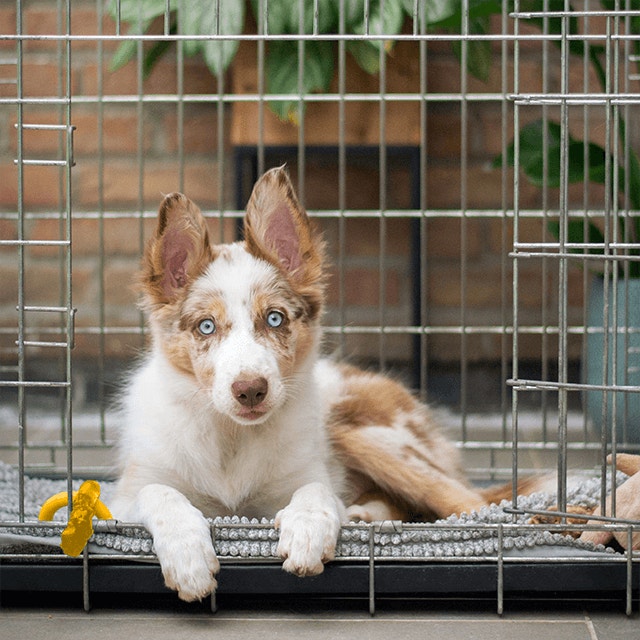
A lot of these will be obvious, of course, (hello, your new sofa!) but it’s also worth mentioning that a crate can be a useful tool when puppy toilet training as dogs don’t tend to like to make a mess where they sleep. We’ve got lots of advice on crate training your puppy.
The bedrock of any training regime is consistency. Toilet training a puppy is no exception to this and, while your dog is building up their bladder control, it pays to get into a routine that gives them lots of opportunities to go to the toilet appropriately. With this in mind, it’s a good idea to take your dog to their toileting area:
The most important thing is to create a consistent daily routine for you and your puppy at the beginning of your puppy journey.
It can be a good idea to teach your puppy a cue word they associate with going to the toilet. This can be anything from ‘quickly’ to ‘wee wees’. Just make sure you’re consistent and that everyone in the family is using the same cue word.
It can sometimes be a good idea to carry your puppy to their designated area, to allow them to get used to it without doing their business on the way. It ensures they reach their spot quickly and safely, and works well in establishing a routine.
The last point on the list raises the subject of nighttime puppy toilet training which prompts the all-important question:
Puppies’ bladders aren’t big enough to last all night long. Some owners stay up late to take them for a wee and then set an early alarm. Others take their puppy for a night wee. If you do the latter, make sure your puppy doesn’t think 4 am is playtime!
For puppies aged under 10-12 weeks, you should gently wake them once per night, as they can typically only hold their bladder for 2-4 hours at that age. At 4 months, most puppies can sleep through the night, though a scheduled 3-4 hour break can prevent accidents.
When you first start housetraining your dog, you might see them starting to go to the toilet in the wrong place a few times. When this happens, you need to quickly and calmly get your dog to their toileting area without scolding them.
Keeping your routine consistent is the best way to ensure your puppy uses the toilet before going to sleep where possible.
The most important thing to remember is that potty training a puppy, during the day or night, takes time, consistency, and patience. That said, here are a few tips that might make nighttime training that much easier:
Toilet training isn’t always easy! Puppy toilet training takes a lot of patience and consistency; If you utilise these skills, your puppy will soon be fully housetrained.
The first thing to remember is that when your furry friend goes to the toilet in the right place, you’ll want to reward that behaviour with lots of positive reinforcement. This means dishing out lots of praise (without startling them) and tasty treats as a reward.
PEDIGREE™ Tasty Mini Puppy Treats are great for rewarding your puppy in a healthy way. Just make sure you’ve giving them the appropriate amount of snacks for their weight and breed.
When you’re toilet training your puppy it’s important you’re patient and consistent. Each dog is an individual who will ‘get it’ in their own time, but if you follow the advice above, you can be confident of success. In the meantime, here are a few ballpark guidelines:
It’s difficult to say what age a puppy should be toilet trained as every dog is different. It also depends on how well they are trained.
If you follow all the appropriate steps and are clear, patient and consistent, you can reasonably expect your puppy to be housetrained by around six months of age, or even earlier.
When it comes to how to toilet train a puppy, there’s no magic formula for quick success. Housetraining requires patience, commitment and consistency.
As puppies develop and change at a fast rate, so do their toilet needs:
You can start toilet training your puppy as soon as you get them home. However, keep in mind that puppies have very small bladders and can’t be expected to ‘hold it’ for long periods of time or throughout the night.
If done correctly, toilet training can be mastered within a month or two, although every dog is a unique individual so the exact amount of time will vary.
A toilet training puppy should never be told off or punished in any way. Not only will reprimanding them not have any positive effect, but it could even make your dog frightened of going to the toilet or of you.
We all take a while to get the hang of new things and accidents are an inevitable part of toilet training (but should be minimal if you are following the steps above).
As already mentioned, it’s important you never scold or punish your furry friend, instead staying calm and cleaning up without any fuss.
This clean-up is best done with an enzymatic cleaner or a dilution of 1:9 biological washing powder and warm water. Household disinfectants aren’t recommended as these often contain ammonia which can encourage your furry friend to go to the toilet in the same area again.
Pee pad training a puppy requires consistency, frequent supervision, and positive reinforcement. Place pads in a designated, accessible area, and take your puppy there immediately after eating, sleeping, or playing. Reward success with treats and praise, avoid punishing accidents, and use enzyme cleaners to remove scents
Key steps to success:
If you live in an apartment without any quick access to outside space, you might feel particularly nervous about puppy toilet training.
However, the good news is there are things out there to make your life – and your puppy’s life – easier. Pee pads are great because they’re so easy to move around and dispose of.
One important thing to remember is the 10-10-10 rule. This entails 10 minutes outside for a toilet break, followed by 10 minutes of supervised play (away from toilet areas), and then 10 minutes of rest and observation inside.
In terms of your approach to toilet training, you should follow all the same principles regardless of your living situation.
Now that we’ve shown you how best to toilet-train your puppy, here are a few things to avoid:
If you adopt an older dog, they’ll probably be housetrained. However, a new home can make your dog ‘forget’ their toilet training. Sometimes, you don’t know a dog’s full story and they can have medical or behavioural problems that are brought to the fore by a house move.
If you are toilet training an adult dog, follow the advice you would for a puppy. The process may take a little longer (young brains being quicker to learn) but is very achievable.
If you’ve been puppy toilet training for a while and are having problems, it’s a good idea to chat to your vet or a qualified animal behaviourist. You can also get more advice in our article about tackling problems.
Toilet training is not an easy process, and cannot be rushed. Patience is key, as there are many reasons why it may take longer for one puppy to learn than another.
Besides the things we’ve mentioned in this article, like the importance of proper training and routine, it may also come down to the following factors:
There are many reasons why your puppy might use the toilet inside even after being taken into the garden or outside to do their business. These include:
Don’t worry, though, as this behaviour can be trained away with a few changes. Try these tips to stop their unwanted behaviour:
Toilet training a puppy typically takes between 4 and 6 months, though varies based on breed size, age, and individual development.
Toilet training is a process that cannot be rushed. The best and quickest way to toilet train a puppy is by being patient, offering a consistent daily routine, and supervising them whenever they are taken to their designated toilet area.
Smaller breeds are harder to toilet train as a result of their more frequent need to use the toilet. This includes breeds like Pomeranians and Jack Russell Terriers.
Toilet training should begin at the 8-12 week mark in terms of age, but you can begin as soon as you bring your pup home! Most puppies who begin at this time are successfully toilet-trained by the age of 5-6 months.
Buy Now
Click to buy from any of the retailers below